
How Can a Dubai Office Renovation Support Employee Retention Without Relying on Gimmicks?


Download the Reno App Now!
.png)
Employee retention is influenced by far more than compensation, career progression, and company culture. The everyday workplace experience also plays a role in how employees feel about their organisation and whether they can see themselves continuing to work there.
An office with poor acoustics, uncomfortable workstations, inadequate meeting spaces, or limited access to natural light can create daily frustrations that gradually affect employee satisfaction. On the other hand, a thoughtfully designed workplace can make employees feel supported, comfortable, and better equipped to do their jobs.
However, not every workplace investment delivers meaningful value.
9 Things a Dubai Office Renovation Should Prioritise to Support Employee Retention
Here are some of the office renovations we’ve seen improving employee engagement and retention:
1. Comfortable Workstations That Support Everyday Productivity
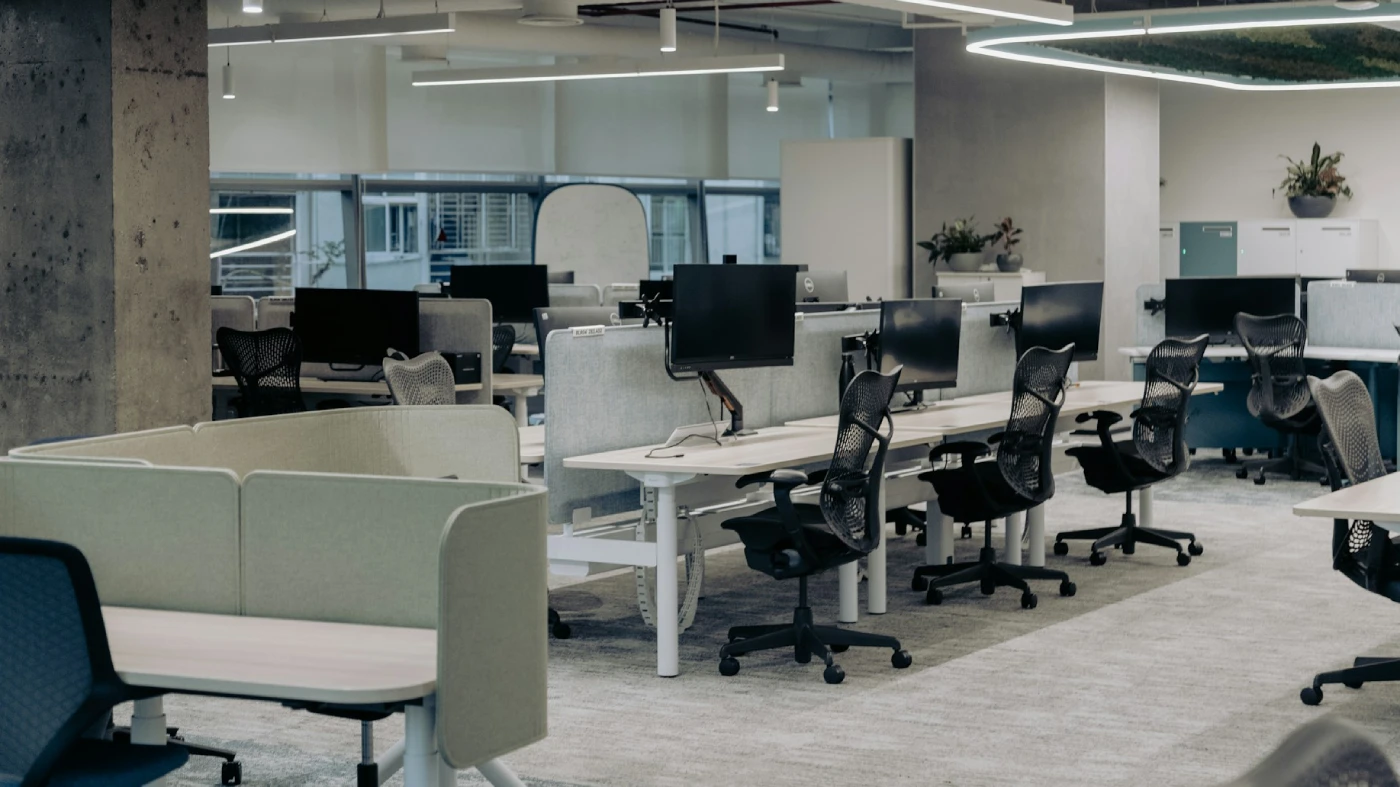
Employees spend a significant part of their working day at their desks. If workstations are cramped, poorly arranged, or uncomfortable, the impact is felt repeatedly, not just during the first few weeks after a renovation.
Ergonomic chairs, appropriately sized desks, sufficient legroom, accessible power outlets, and monitor-friendly layouts can make the workday more comfortable. These may not be the most visually exciting elements of an office, but they have a direct impact on how employees experience the space.
Workstation planning should also consider:
- The type of work employees perform
- Screen usage and equipment requirements
- Personal storage needs
- Desk spacing and circulation
- Opportunities for focused work
- Accessibility and inclusive design
2. Acoustic Comfort and Spaces for Focused Work
Open-plan offices can support collaboration, but excessive noise can quickly become one of the biggest sources of workplace frustration.
Constant conversations, ringing phones, impromptu discussions, and overlapping virtual meetings can make it difficult for employees to concentrate. Over time, employees may associate the office with distraction rather than productivity.
A renovation should consider a mix of spaces, including:
- Quiet work zones
- Enclosed focus rooms
- Acoustic meeting pods
- Sound-absorbing wall and ceiling treatments
- Phone booths for private calls
- Clearly defined collaborative areas
The goal is not to eliminate all workplace interaction. It is to give employees greater control over when they collaborate and when they need uninterrupted concentration. This is particularly relevant for Dubai offices with hybrid teams, client-facing employees, and roles that require extended periods of deep work.
3. Reliable Technology for Hybrid and In-Person Collaboration
Employees are unlikely to value an office designed around collaboration if the technology makes collaboration difficult.
Poor video quality, inadequate microphones, unreliable connectivity, insufficient charging points, and meeting rooms that cannot accommodate hybrid participants create unnecessary friction.
Technology should be considered part of the workplace experience, not an afterthought added once the interiors are complete.
Useful investments may include:
- Meeting rooms equipped for hybrid calls
- Reliable Wi-Fi coverage
- Easily accessible charging points
- Screens that support presentations and collaboration
- Simple room-booking systems
- Technology that employees can operate without assistance
4. Temperature Control That Reflects Dubai’s Climate
Thermal comfort is particularly important in Dubai, where outdoor temperatures can be extreme for much of the year.
An office may have attractive finishes and high-quality furniture, but employees will struggle to enjoy the space if some areas are consistently too cold while others remain uncomfortable. Uneven cooling, poorly positioned air-conditioning vents, and limited control over individual comfort can become persistent complaints.
Renovation planning should evaluate:
- Air-conditioning distribution
- Temperature differences between zones
- Vent placement near workstations
- Meeting room ventilation
- Air quality
- The comfort needs of different employee groups
5. Practical Break Areas That Employees Actually Use
Break areas can support wellbeing and informal interaction, but they need to be designed around how employees genuinely take breaks.
A large lounge with expensive furniture may remain empty if it is located too far from workstations, lacks privacy, or does not provide the facilities employees need. In contrast, a modest but thoughtfully planned pantry or refreshment area may become one of the most-used spaces in the office.
Useful break-area considerations include:
- Adequate seating
- Drinking water access
- Functional pantry facilities
- Refrigeration and storage
- Easy maintenance
- A balance of social and quieter seating
- Convenient placement within the office
6. A Workplace Designed Around How Employees Actually Work
Employees do not all work in the same way. Some perform best in quiet individual spaces, while others need access to collaborative areas, informal discussion zones, or flexible seating. A workplace designed around a single environment may work well for one group but create friction for another.
Before finalising the design, HR and facilities teams should look at how employees actually use the office rather than relying on assumptions. This can reveal where space is underused, where employees face recurring frustrations, and what the workplace needs to support different working styles.
- Mix work settings to include focus, meeting, collaboration, and flexible spaces.
- Review space usage: to identify overcrowded and underused areas.
- Address recurring issues, and consider noise, interruptions, privacy, and storage.
- Reflect different work patterns to account for roles, teams, and working styles.
- Avoid assumptions and design around actual employee behaviour and needs.
7. Private and Comfortable Spaces for Sensitive Conversations
HR teams regularly handle conversations that require privacy and discretion. Employees may also need a quiet space for personal calls, health-related matters, manager discussions, or emotionally difficult moments during the workday.
If the office offers only open desks and glass-walled meeting rooms, employees may avoid having important conversations because they do not feel sufficiently comfortable or secure.
A renovation should consider private spaces for:
- Employee-manager conversations
- HR consultations
- Interviews
- Confidential calls
- One-to-one meetings
- Personal or wellbeing-related needs
These spaces do not need to be elaborate. They need to be acoustically appropriate, accessible, and located where employees can use them without feeling exposed.
8. Inclusive Design That Considers the Whole Workforce
An office designed for an imagined “average employee” may overlook the needs of many people who use it.
Inclusive workplace design considers differences in mobility, sensory sensitivity, age, work preferences, cultural expectations, and personal comfort. Depending on the workforce, this may involve:
- Accessible routes and facilities
- Clear wayfinding
- Adjustable furniture
- Seating variety
- Reduced sensory overload in selected areas
- Private spaces for individual needs
- Thoughtful lighting choices
- Facilities that support different cultural and personal requirements
For HR and People & Culture leaders, inclusive design can reinforce the message that employees are not expected to adapt to an inflexible environment. The workplace is designed to support them.
How Should HR and People & Culture Leaders Prioritise Office Renovation Investments?
Not every employee request should automatically become a renovation project. HR leaders need to distinguish between improvements that solve recurring problems and features that are attractive mainly because they are fashionable.
The following principles can help prioritise investment:
- Start with recurring workplace frustrations. Identify the issues employees experience repeatedly, such as noise, lack of privacy, poor meeting facilities, uncomfortable furniture, or inadequate storage.
- Separate functional needs from novelty features. Ask whether an investment will improve employees’ daily experience after the initial excitement disappears. If its primary value is visual appeal or social-media visibility, it may not deserve priority.
- Consider usage frequency and employee reach. A workstation upgrade, improved cooling system, or better acoustic treatment may benefit employees every day. A specialised feature used by a small group may have a more limited impact.
- Evaluate multiple outcomes. Prioritise improvements that support more than one objective; for example, a flexible meeting space that supports collaboration, interviews, client calls, and team discussions.
- Test assumptions before committing to design. Employee surveys, workplace observations, usage data, and pilot layouts can help validate what employees actually need. Through RENO’s Designer Collaboration feature, organisations can turn genuine employee requirements into practical design decisions rather than defaulting to short-lived workplace trends.
- Plan for maintenance and long-term usability. Consider how much an installation will cost to maintain, clean, repair, or replace. A feature that looks impressive but becomes difficult to manage may create more operational work than value.
Also read: Compare the best office areas in Dubai
RENO approaches office renovation by starting with the workplace brief and understanding what the organisation and its employees actually need from the space. Those requirements can then be translated into practical design and fit-out decisions through to execution, keeping the final workplace aligned with the original objectives.
Conclusion
An office renovation can support employee retention when it improves the everyday experience of working there. The most valuable investments are not necessarily the most visually dramatic, but the ones employees use frequently and benefit from consistently.
For HR and People & Culture Directors, the focus should be on creating a workplace that responds to genuine employee needs rather than short-lived trends.
Planning an office renovation in Dubai? Speak to our experts today.

.jpeg)